Most Comfortable Boots for All-Day Wear: A Buyer's Guide
Last Updated: November 13, 2026
Quick Summary
The most comfortable all-day wear boots have cushioning, a stable heel, a flexible sole, and a toe box with enough room to move. Choose the style that matches your routine, whether that means long walks or standing at work, and test the fit before committing.
- Thick cushioning on a narrow toe box can squeeze toes, so check the whole fit before buying.
- Shop for boots in the late afternoon, when feet are slightly larger, and wear your everyday socks.
- Boots with a removable footbed let you add an insole later without losing a good fit.
- Walk ten steps in the store and check that your arch feels supported, not pressed.
- The Black Slouchy Moto Boots cost $47.00, while the Black Studded Ankle Boots cost $45.00.
Table of Contents
- What Makes a Boot Comfortable for All-Day Wear
- The Most Comfortable Boots for Walking All Day: Women's Styles
- The Most Comfortable Boots for Standing All Day at Work
- Comfortable Boots With Arch Support: What to Look For
- How to Choose Boots for All-Day Comfort: Fit, Toe Box and Sizing
- Pairing Socks and Insoles With Your Boots
- Choosing Your Next Pair of Boots for Everyday Comfort
- Frequently Asked Questions
Finding the right pair of boots for all-day wear can feel like a gamble, especially when you need an "all-day wear boots" option that works from morning to night.
We recommend starting with a clear idea of how you will actually spend your day. A boot built for standing behind a counter has different needs than one built for a long walk between meetings.
What Makes a Boot Comfortable for All-Day Wear
Comfort in all-day wear boots comes down to a few features working together. Cushioning, support, weight and flexibility all affect how your feet feel over a long day.
Cushioning, Insoles and Shock Absorption
Cushioning absorbs the impact of each step, and it matters most on hard floors like concrete, tile or pavement. A boot with a padded footbed or removable insole gives you room to add arch support or swap in a thicker insole later. Look for a sole that compresses slightly underfoot rather than feeling rigid. Watch out: thick cushioning on a boot with a narrow toe box can push your toes into an uncomfortable squeeze, so check the whole fit before buying.
Weight, Flexibility and Break-In Period
Heavy boots fatigue your legs faster, even when the padding feels good. A lighter boot with a flexible sole bends where your foot bends, which reduces strain over long periods. Leather often needs a break-in period, while many synthetic and faux leather styles feel comfortable sooner. Plan to wear new boots around the house before a long workday.
The Most Comfortable Boots for Walking All Day: Women's Styles
If you spend your day on foot, prioritize a flexible sole, a secure heel and enough room in the toe box. Slouchy and moto styles can look relaxed, but the structure underneath determines whether they hold up on a long walk.
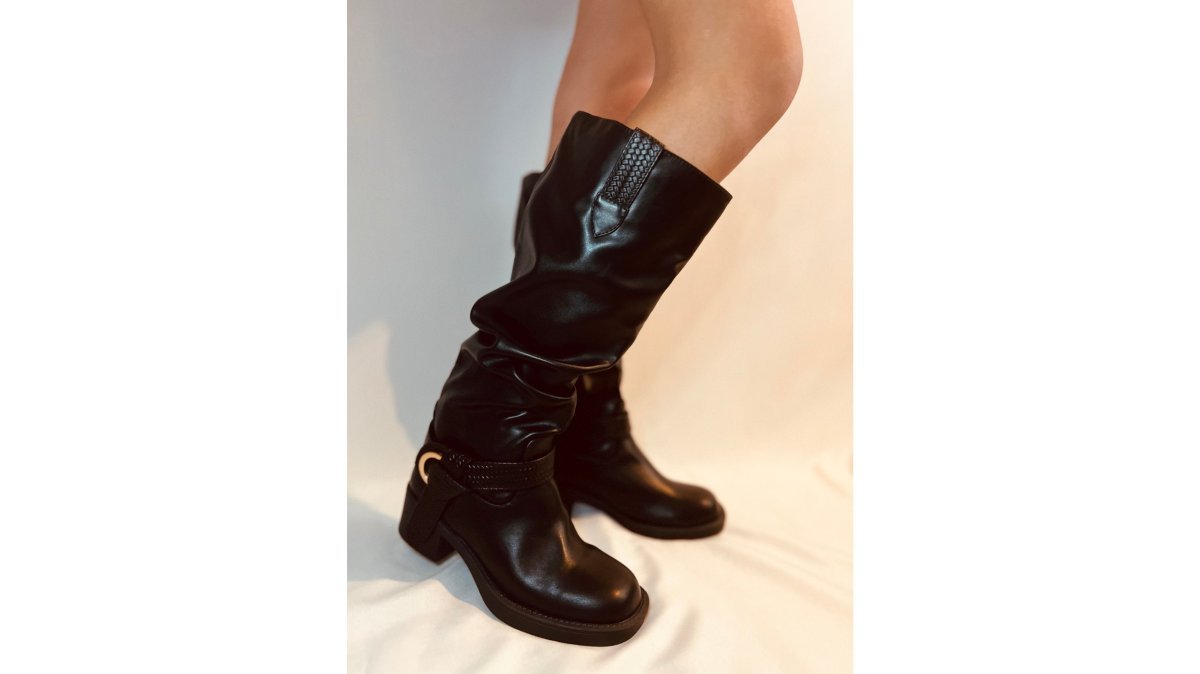
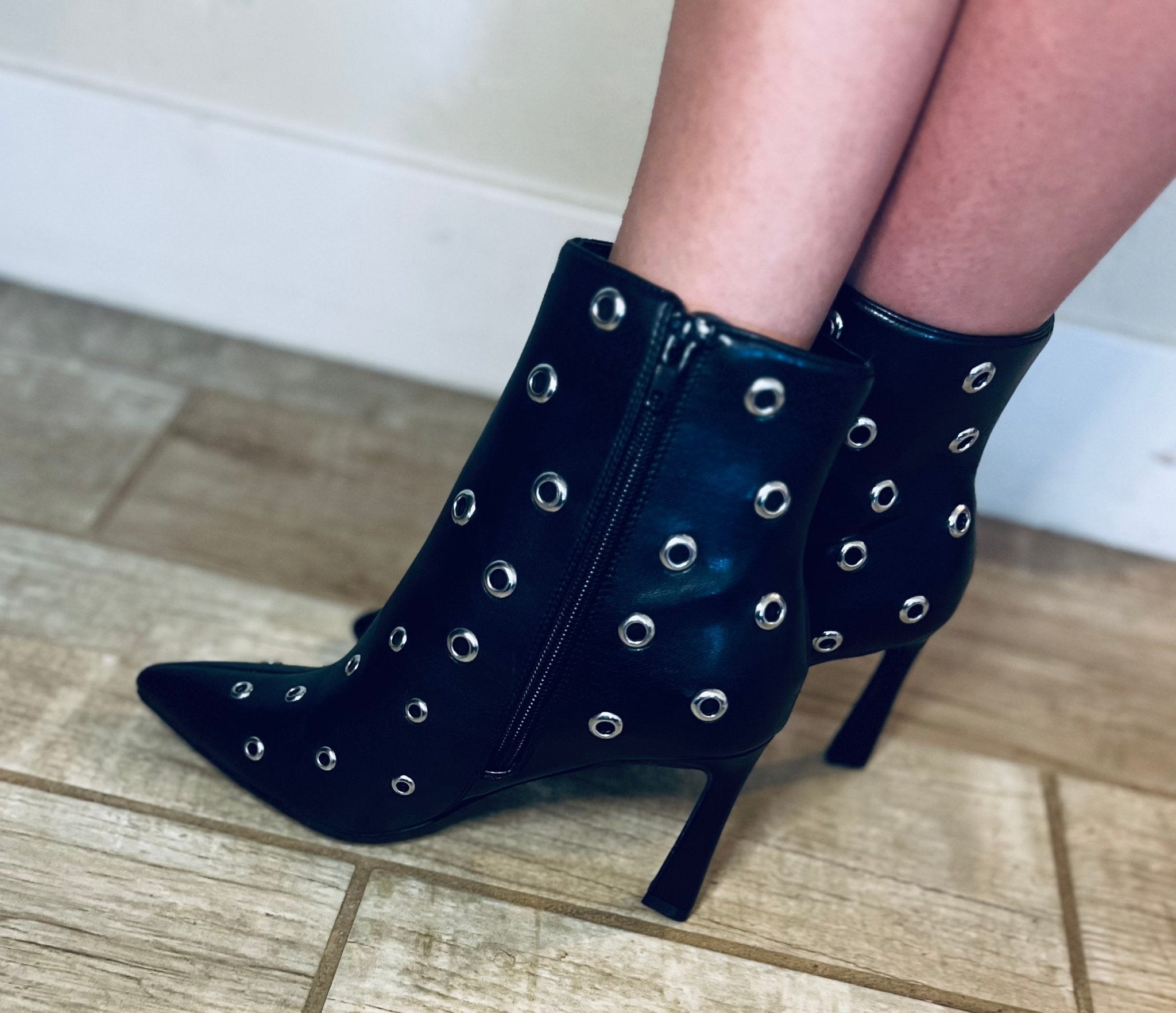
Our Black Slouchy Moto Boots, priced at $47.00, bring a knee-high silhouette with braided detailing and gold-toned buckle accents. They suit casual days that involve a lot of walking, and they pair easily with denim or an oversized layer. Black Slouchy Moto Boots | Edgy Knee High Boots for Women
Wipe the faux leather with a damp cloth and keep the boots away from direct heat and sunlight.
Here is how the two featured styles compare on the facts the article gives.
| Product | Price | Best for |
|---|---|---|
| Black Slouchy Moto Boots | $47.00 | Casual days with a lot of walking |
| Black Studded Ankle Boots | $45.00 | Standing all day at work |
The Most Comfortable Boots for Standing All Day at Work
Standing for hours puts pressure on the heel, arch and ball of the foot. Choose a boot with a stable heel, a footbed you can cushion further if needed, and a toe box that does not compress your forefoot.
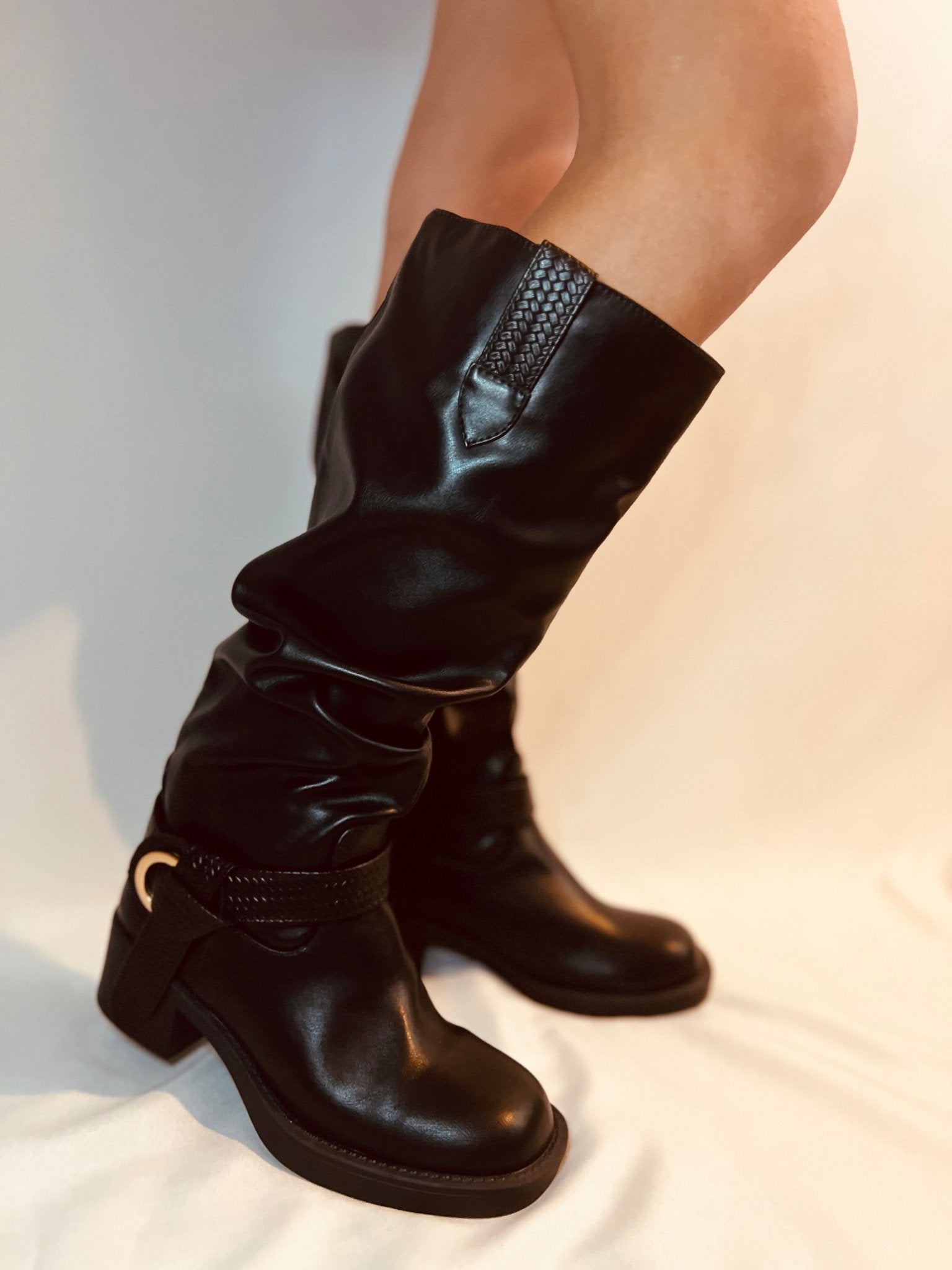
Our Black Studded Ankle Boots, priced at $45.00, offer a pointed toe, a slim heel and a zip closure. The pointed toe needs more room than a rounded one, so try them on at the end of the day when your feet are slightly larger. Black Studded Ankle Boots | Edgy Heeled Boots for Women
Comfortable Boots With Arch Support: What to Look For
Arch support keeps the foot aligned and reduces fatigue in the arch and calf, but "arch support" means different things depending on your foot. A boot that feels supportive to someone with a high arch can feel like a hard lump under the midfoot to someone with a flat arch, so the goal is not maximum support, it is support matched to your foot shape.
What actually provides support inside a boot
Support comes from three layers working together:
- The midfoot shank. A firm shank, often steel, fiberglass, or a stiff composite, runs under the arch and keeps the boot from folding in the middle. A boot that bends easily at the midpoint offers little arch support no matter how thick the footbed is.
- The footbed contour. A contoured footbed with a raised medial arch and a cupped heel holds the foot in place. Flat, uniform footbeds rely entirely on the outsole for structure.
- The heel counter. A stiff heel counter keeps the rear of the foot stable, which matters for anyone who overpronates or spends hours on hard floors.
Match support to your arch height
- High arches usually need more cushioning under the ball of the foot and a footbed that fills the space under the midfoot. A boot with a deep heel cup and a soft forefoot works better than a rigid, flat footbed.
- Low or flat arches tend to need a firmer medial post or a footbed with a defined arch shelf so the foot does not roll inward. Too much soft cushioning can feel unstable.
- Neutral arches can usually wear a stock footbed, but a removable one still helps because it lets you fine-tune later.
If foot pain persists, a podiatrist or physical therapist is the right resource.
The removable-footbed test
Look for a boot with a removable footbed where possible. A common mistake is buying a boot that fits perfectly without an insole and then discovering it does not fit once you add one. Test the boot with the insole you plan to use. If the boot has no removable footbed, a supportive insole may not fit, so choose another pair.
Check toe room after an insole is in, not before.
A quick support check in the store
- Twist the boot lengthwise, it should resist folding at the arch.
- Press your thumb into the medial arch area, you should feel a firm shelf, not soft foam.
- Stand on one foot, your heel should stay centered in the heel cup without rolling inward.
- Walk ten steps, your arch should feel supported, not pressed.
If a boot fails the twist test, no insole will fully compensate. Start with a structurally supportive boot, then fine-tune with insoles.
How to Choose Boots for All-Day Comfort: Fit, Toe Box and Sizing
Fit matters more than any single feature. A boot can have excellent cushioning and still cause blisters if the heel slips or the toe box runs narrow. The difference between a boot you forget about by noon and one you resent by 3 p.m. usually comes down to four measurements: length, width, volume, and heel hold.
Shop at the right time and with the right sock
Feet swell through the day, so shop for boots in the late afternoon or evening. Wear the socks you plan to wear with them, a thick wool sock can change your fit by a half size. If you plan to add an insole, bring it with you or test the boot with a similar thickness.
The four-point fit check
- Toe box: Your toes should have room to move without touching the front. Aim for roughly a thumb's width between your longest toe and the end of the boot when standing. A pointed toe needs more length than a rounded one because the taper compresses the forefoot.
- Width: Leave enough room across the ball of the foot for a full day of standing. If the boot presses on the widest part of your foot, it will not stretch enough to fix the problem, leather gives slightly, but not a full width.
- Heel: Your heel should stay in place without rubbing when you walk. A small amount of lift is normal; sliding up and down is not.
Sizing by foot shape
- Wide feet: Look for brands that offer wide widths or styles described as generous through the forefoot. Sizing up to gain width usually creates heel slip.
- Narrow feet: A lace-up or adjustable-strap style lets you tighten the instep; a slip-on Chelsea may gap.
- High insteps: A side zip or lace-up is easier to get into than a pull-on boot, and it relieves pressure across the top of the foot.
- Bunions or a prominent big-toe joint: A rounded or square toe box gives more room than a pointed one.
Sizing mechanics that prevent returns
Sizing varies between brands, so compare the size chart on each product page rather than assuming your usual size. Measure your foot at the end of the day, standing, with the sock you plan to wear. If you fall between sizes, size up for boots you will wear with thick socks and size down for thin-sock, close-fitting styles. Review the return and exchange terms before you commit.
Test the fit before a long day
Wear new boots around the house for a few hours on carpet before committing to a full workday. Check for heel slip, toe pressure, and any hot spots at the instep or ankle.
Watch out: buying a boot that feels snug because you expect it to stretch can backfire, leather relaxes across the instep but rarely gains meaningful length, so a too-short boot stays too short.
Pairing Socks and Insoles With Your Boots
Your sock thickness changes how a boot fits, so choose socks before you try on boots.
Insoles follow the same logic. A slim insole adds support without changing the fit much, while a thick insole may require a half size up.
Pairing the right socks and insoles with a well-fitting boot often makes the biggest difference in how your feet feel by the end of the day.
Choosing Your Next Pair of Boots for Everyday Comfort
Start with how you will spend most of your day, then match the boot to that routine. For long walks, look for flexibility and a secure heel.
When you are ready to look at options, browse our Black Slouchy Moto Boots and Black Studded Ankle Boots to see which silhouette fits your day best. For a related styling idea, see How to Style Modest Tops With Cargo Pants.
Frequently Asked Questions
What is the best work boot for being on your feet all day?
For long shifts on your feet, look for a boot with a cushioned midsole, a removable insole you can replace with a supportive footbed, and a roomy toe box so toes can spread. Leather uppers that stretch slightly and a flexible sole reduce pressure points. Fit matters more than brand: try boots in the afternoon when feet are slightly swollen, and wear the socks you plan to use at work. A boot that feels comfortable in a store but pinches after two hours will not hold up over a full shift.
Are boots with arch support better for walking all day?
For many people, yes. A contoured footbed that supports the arch distributes pressure more evenly across the foot and can reduce fatigue during long walks. Those with flat feet or high arches often notice the difference most. If a boot's built-in footbed does not provide enough support, a removable insole can be swapped for a model with firmer arch support. Check that the boot still has room for the insole once it is in place.
How should comfortable boots fit?
Comfortable boots should fit snugly at the heel without slipping, leave about a thumb's width of room in front of the longest toe, and allow the ball of the foot to sit where the boot bends. The widest part of your foot should not feel squeezed. Walk around the store on a hard surface, go up and down a ramp or stairs if available, and check for rubbing at the back of the heel, which is the most common sign of a poor fit.
How can you break in new boots without getting blisters?
Wear new boots for one to two hours at a time, gradually building up over several days rather than wearing them all day right away. Use thin liner socks under a thicker pair to reduce friction, and cover any hot spots with moleskin or blister tape before they form. Leather often needs a few wears to soften. If a boot still rubs after a week of short wears, a different size or width is usually the better fix.