


How to Mix and Match Clothes: 2026 Guide
Table of Contents
- What Mix and Match Dressing Actually Means
- Capsule Wardrobe Essentials to Build From
- Mixing Patterns for Beginners Without Clashing
- How to Style Modest Streetwear for Any Occasion
- How to Mix and Match for Your Body Type
- Organizing Your Closet for Maximum Versatility
- Budget-Friendly Ways to Build a Mix-and-Match Wardrobe
- Frequently Asked Questions
Last Updated: September 1, 2026
What Mix and Match Dressing Actually Means
Learning how to mix and match clothes separates a closet full of pieces from one that actually works. The problem is rarely quantity, it's the absence of a system.
Mix and match dressing is building a wardrobe from intentionally chosen pieces that coordinate across multiple outfits, so any combination looks deliberate and polished. Every piece earns its place by working with at least three others. This approach rests on color theory, silhouette awareness, and understanding which items carry visual weight versus which support and recede.
Capsule Wardrobe Essentials to Build From
A capsule wardrobe is a curated collection of versatile, high-quality pieces that form the backbone of a functional wardrobe. The concept, popularized by fashion consultant Susie Faux in the 1970s, rests on a simple premise: fewer, better pieces create more outfit combinations than a closet packed with disconnected items.
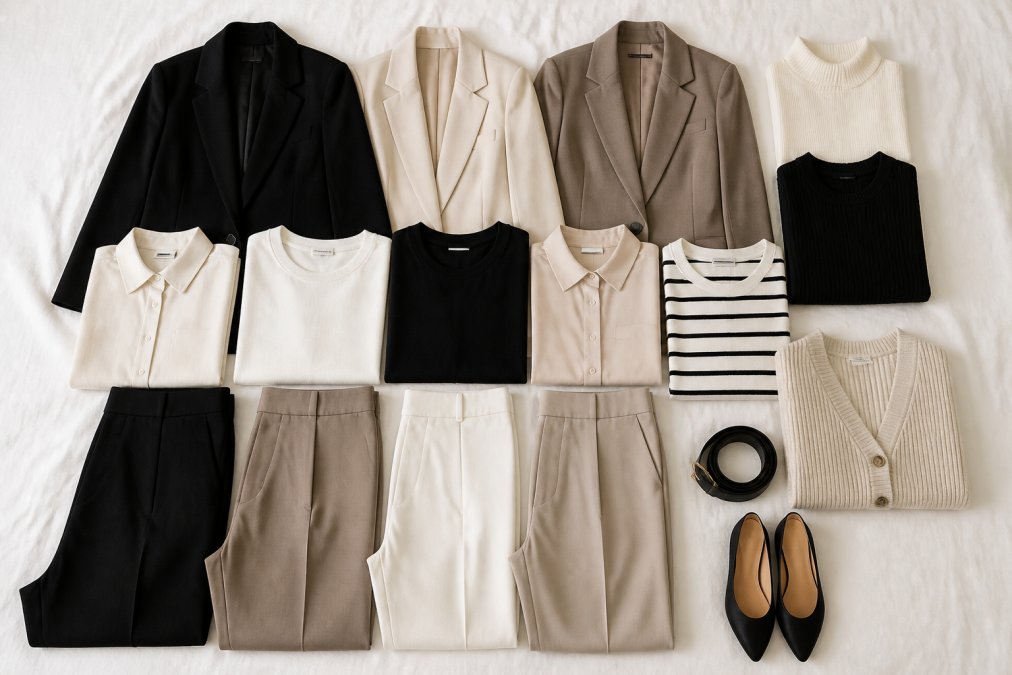
According to The Fashion Institute of Technology's guide to wardrobe planning, the most functional capsule wardrobes center on neutral tones with two to three accent colors woven in through accessories and layering pieces.
Hero Pieces vs. Filler Pieces
Hero pieces are statement items that define an outfit's character: a structured blazer, wide-leg trouser, or tailored midi dress. These carry visual weight and set the tone.
Filler pieces are quiet workhorses: a fitted long-sleeve in ivory, ribbed tank in charcoal, or simple straight-leg pant in black. They make hero pieces look better.
The common mistake is buying too many hero pieces and not enough fillers. Aim for roughly two filler pieces for every hero piece to create visual balance and outfit flexibility.
A practical starting point:
- 2-3 structured blazers or longline cardigans (hero)
- 4-5 neutral tops in varied necklines (filler)
- 2-3 bottoms: wide-leg trousers, midi skirt, tailored straight-leg pants (hero and filler)
- 1-2 layering pieces: oversized button-down, lightweight duster (filler)
- 1 versatile dress that transitions across occasions (hero)
Building a Color Palette That Works Together
Color theory is the invisible architecture of a cohesive wardrobe. You need three things: a neutral base, a secondary tone, and one accent.
Your neutral base handles most filler pieces: black, white, ivory, camel, grey, or navy. Your secondary tone appears in hero pieces and should be complementary or analogous to your base. Your accent color shows up in accessories or one statement piece per outfit.
Monochromatic outfits, where you wear varying shades of the same tone, are the easiest entry point. Once comfortable there, move into complementary combinations: navy and camel, ivory and rust, charcoal and sage.
Limit any single outfit to three colors maximum. More than three creates visual noise that reads as disorganized.
Mixing Patterns for Beginners Without Clashing
Pattern mixing follows two predictable rules that prevent chaos.
Scale and Contrast: The Two Rules That Prevent Chaos
Scale refers to the size of a pattern's repeat. A large floral and small stripe can coexist because the eye reads them as distinct. A large floral and large plaid fight for the same visual space. Always pair a large-scale pattern with a small-scale one.
Contrast refers to how much patterns differ. High contrast, such as a bold geometric paired with a delicate pin-stripe, creates intentional visual tension. Low contrast, such as two similarly sized abstract prints in the same color family, creates confusion. Choose one: make them clearly different in scale, or keep them in the same color palette.
According to Vogue's guide to pattern mixing, the most reliable approach for beginners is anchoring one pattern in a neutral colorway. A black-and-white stripe paired with a terracotta floral works because the stripe reads as near-neutral.
Structured vs. Rounded Patterns
Structured patterns include stripes, plaids, houndstooth, and geometric prints. They have hard edges and linear repetition, reading as formal and precise.
Rounded patterns include florals, abstract prints, paisleys, and organic shapes. They have soft edges and irregular repetition, reading as relaxed and expressive.
Pairing a structured pattern with a rounded one creates natural balance. A plaid blazer over a soft floral top works. Two geometric prints at the same scale clash.
How to Style Modest Streetwear for Any Occasion
Modest streetwear styling is about proportion, layering, and silhouette choices that create a confident, put-together look across many contexts.
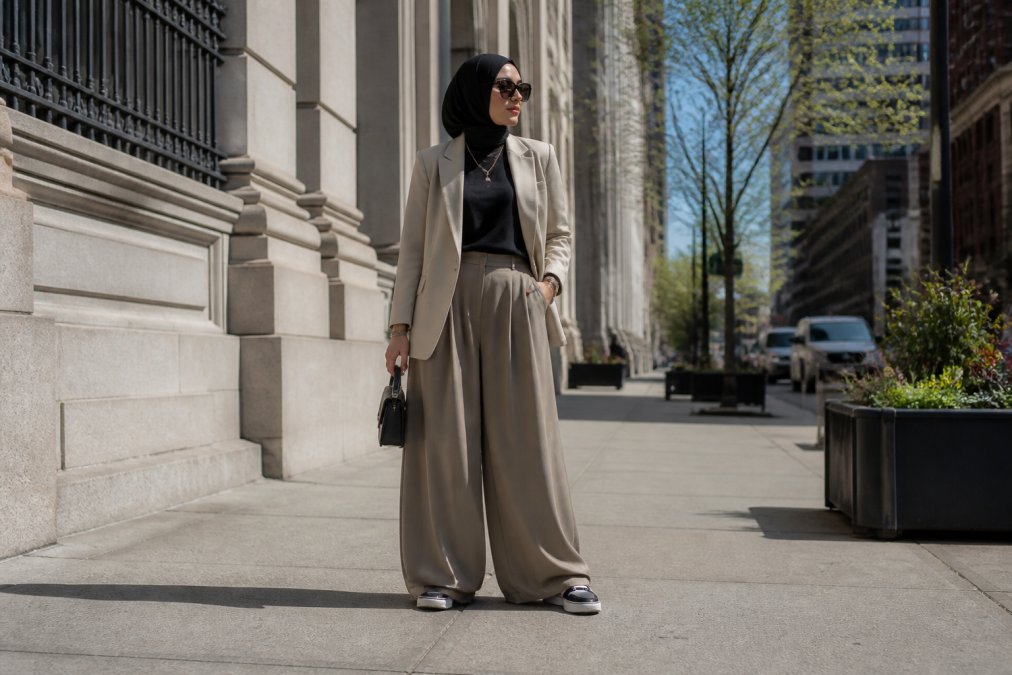
The pieces that anchor this aesthetic: longline blazers, wide-leg trousers, midi-length skirts, oversized button-downs, and structured duster coats. The key is intentional fit: pieces should be relaxed without being shapeless.
Office to Weekend: One Outfit, Two Contexts
A single blazer can work for both the office and a Saturday afternoon. The pivot point is the base layer and accessories, not the blazer itself.
Office context: Structured blazer over a fitted ribbed top, paired with wide-leg trousers and simple leather loafers. Clean, minimal accessories. This reads professional.
Weekend context: Same blazer, unbuttoned, over a relaxed longline tee and straight-leg denim. White sneakers and layered necklaces. The blazer shifts from formal anchor to casual topper.
| Piece | Office Styling | Weekend Styling |
|---|---|---|
| Structured blazer | Buttoned, over tailored trousers | Open, over denim or relaxed pants |
| Wide-leg trouser | With loafers or block heels | With clean sneakers or sandals |
| Midi skirt | Tucked-in blouse, belt | Relaxed tee, flat sandals |
| Oversized button-down | Tucked, with trousers | Open over a fitted layer |
| Longline cardigan | Over a fitted dress | Over a tee and jeans |
Seasonal Transitions Without Starting Over
Transitional dressing, layering and re-contextualizing pieces across seasons, means your summer pieces extend into fall and fall pieces carry into winter.
- Layer temperature, not volume. A lightweight linen shirt under a structured blazer handles a cool autumn day without bulk.
- Shift your palette gradually. Move from lighter neutrals in spring toward richer tones in fall by swapping filler pieces.
- Use texture as a seasonal signal. Ribbed knits and heavier weaves signal cooler months. Linen and open-weave fabrics signal warmth.
- Anchor with year-round pieces. A black wide-leg trouser, camel blazer, and white button-down work in every season.
How to Mix and Match for Your Body Type
Proportion and silhouette choices affect how outfits read on different frames. The underlying principle is visual balance, creating a silhouette that feels proportional to you.
For petite frames: High-waisted bottoms elongate the leg line. Cropped layers that hit at the natural waist preserve proportion. Avoid wide-leg trousers that pool; opt for tailored wide-leg hemmed precisely.
For taller frames: Longer hemlines and midi lengths look proportional. Wide-leg silhouettes work naturally. A longline duster over a matching set creates a cohesive vertical line.
For curvy frames: Structured pieces with defined waistlines, such as belted blazers or wrap-style midi skirts, create proportion. A fitted ribbed top under an open blazer balances volume.
For straight frames: Texture and volume create dimension. A wide-leg trouser paired with a slightly oversized top reads as intentional rather than boxy.
Fit at the shoulder and waist matters more than any other measurement. When those points are right, most silhouettes work.
Organizing Your Closet for Maximum Versatility
A wardrobe audit is the step most people skip. You cannot build outfit combinations from a closet you can't see clearly.
Pull everything out and sort into three categories: keep, donate, and reconsider. Give the reconsider pile 30 days. If you don't reach for them, they leave.
Organize by function, not type:
- Layering pieces together: blazers, cardigans, dusters, button-downs
- Bases together: tops, tanks, fitted long-sleeves
- Bottoms together: trousers, skirts, denim
- Dresses separate: organized by formality level
Within each category, arrange by color from light to dark. Identify your "orphan" pieces, items that don't coordinate with anything else. These are usually impulse buys. Donate them.
Budget-Friendly Ways to Build a Mix-and-Match Wardrobe
A functional wardrobe doesn't require significant upfront investment. A small number of high-quality staples outperforms a large number of cheap, poorly constructed pieces over time.
Start with your neutral base. Invest in filler pieces, neutral tops, a black trouser, a white button-down, since you'll wear these most frequently.
Buy hero pieces secondhand first. Structured blazers, statement outerwear, and printed pieces are widely available through resale platforms in excellent condition. This lets you test silhouettes and colors before committing to full retail prices.
Apply the cost-per-wear framework. A piece that costs more but gets worn twice a week for three years has a lower cost per wear than a cheap piece worn twice and discarded.
Build in small increments. Add two to three intentional pieces per season. Each addition should connect to at least three pieces already in your closet.
Customers who shop Edgy Elegance Boutique describe pieces as wardrobe staples they reach for repeatedly. That's the outcome a mix-and-match approach produces: pieces that earn their place by working hard across contexts.
For guidance on building an ethical, sustainable wardrobe, the Sustainable Apparel Coalition's resources on responsible consumption offer a useful framework for evaluating purchasing decisions.
Building a mix-and-match wardrobe takes one clear-eyed audit, a color palette decision, and a commitment to buying pieces that work together rather than in isolation. Edgy Elegance Boutique's collection is built specifically for this approach: modest cuts, street-elevated designs, and versatile pieces that transition from the office to the weekend. With a 30-day guarantee and fast delivery, there's no risk in starting. Shop the collection and build a wardrobe that actually works.
=== FAQ ANSWERS (audit these too, same rules) ===
[1] Q: How do I mix and match my clothes to create more outfits? A: Start with a neutral color palette, think black, white, camel, and grey, then add two or three accent colors that work together. Choose pieces where every top can pair with at least two bottoms. A structured blazer, a few quality basics, and one or two statement layers can generate dozens of outfit combinations. The goal is cohesion, not quantity. When every piece shares a color story, getting dressed stops being a daily puzzle.
[2] Q: What is the 3-3-3 rule for building a capsule wardrobe? A: The 3-3-3 rule typically refers to choosing three tops, three bottoms, and three layers or outerwear pieces that all work together. Every item should pair with at least two others in the group, which means nine or more distinct outfits from just nine pieces. It is a starting framework, not a hard limit. Once you understand the logic, you can scale it up while keeping the same mix-and-match versatility that makes a capsule wardrobe practical.
[3] Q: How can I mix and match patterns without clashing? A: The safest approach for mixing patterns is to vary the scale, pair a large print with a smaller one rather than two similarly sized patterns. Keep at least one shared color between the prints to create visual cohesion. For beginners, combining a structured geometric pattern with a softer, rounded print (like stripes with florals) tends to work well. Anchor the look with a solid neutral piece, such as a blazer or trouser, to keep the overall silhouette clean.
[4] Q: What are the essential pieces for a mix-and-match wardrobe? A: A functional mix-and-match wardrobe typically includes neutral-toned basics (white, black, and camel tops), one or two structured blazers, versatile trousers or midi skirts, a quality layering piece, and a few accessories that bridge casual and dressy looks. For modest streetwear specifically, longer hemlines, relaxed silhouettes, and structured outerwear give you the most outfit combinations without compromising coverage or style.
Frequently Asked Questions
Q: How do I mix and match my clothes to create more outfits?
A: Start with a neutral color palette, think black, white, camel, and grey, then add two or three accent colors that work together. Choose pieces where every top can pair with at least two bottoms. A structured blazer, a few quality basics, and one or two statement layers can generate dozens of outfit combinations. The goal is cohesion, not quantity. When every piece shares a color story, getting dressed stops being a daily puzzle.
Q: What is the 3-3-3 rule for building a capsule wardrobe?
A: The 3-3-3 rule typically refers to choosing three tops, three bottoms, and three layers or outerwear pieces that all work together. Every item should pair with at least two others in the group, which means nine or more distinct outfits from just nine pieces. It is a starting framework, not a hard limit. Once you understand the logic, you can scale it up while keeping the same mix-and-match versatility that makes a capsule wardrobe practical.
Q: How can I mix and match patterns without clashing?
A: The safest approach for mixing patterns is to vary the scale, pair a large print with a smaller one rather than two similarly sized patterns. Keep at least one shared color between the prints to create visual cohesion. For beginners, combining a structured geometric pattern with a softer, rounded print (like stripes with florals) tends to work well. Anchor the look with a solid neutral piece, such as a blazer or trouser, to keep the overall silhouette clean.
Q: What are the essential pieces for a mix-and-match wardrobe?
A: A functional mix-and-match wardrobe typically includes neutral-toned basics (white, black, and camel tops), one or two structured blazers, versatile trousers or midi skirts, a quality layering piece, and a few accessories that bridge casual and dressy looks. For modest streetwear specifically, longer hemlines, relaxed silhouettes, and structured outerwear give you the most outfit combinations without compromising coverage or style.
This article was written using GrandRanker
