Modest Streetwear vs Business Casual for Interviews
Table of Contents
- Modest Streetwear vs Business Casual: Core Differences
- Modest Interview Outfits for Women: Making Each Style Work
- What to Wear to a Casual Job Interview
- Job Interview Dress Code Tips: Reading Your Company
- Building Versatile Interview Pieces That Transition Beyond the Office
- Common Mistakes to Avoid in Interview Attire
- Frequently Asked Questions
Last Updated: October 10, 2026
Modest Streetwear vs Business Casual: Core Differences
Understanding the distinction between modest streetwear business casual and traditional business casual helps you make an intentional choice for interviews, both can work, but they signal different things about how you see yourself in the role.
Silhouette and Fit
Traditional business casual favors tailored, structured silhouettes: fitted blazers, straight-leg dress pants, and tops that define your waistline. The goal is polish through precision.
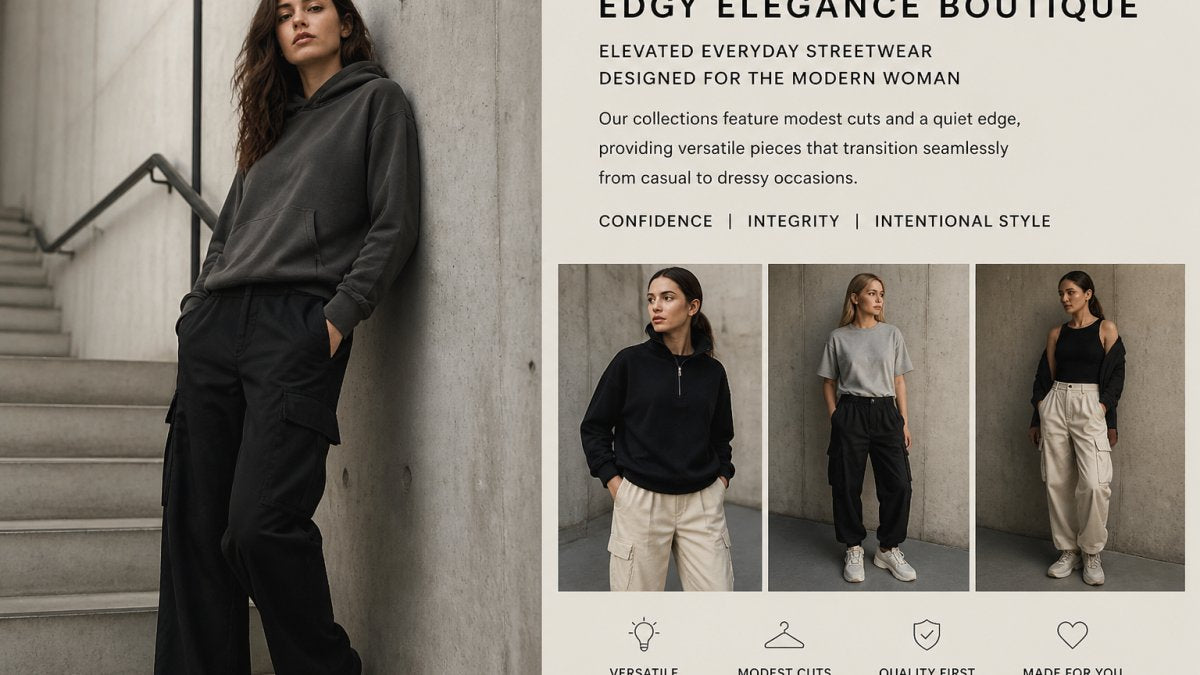
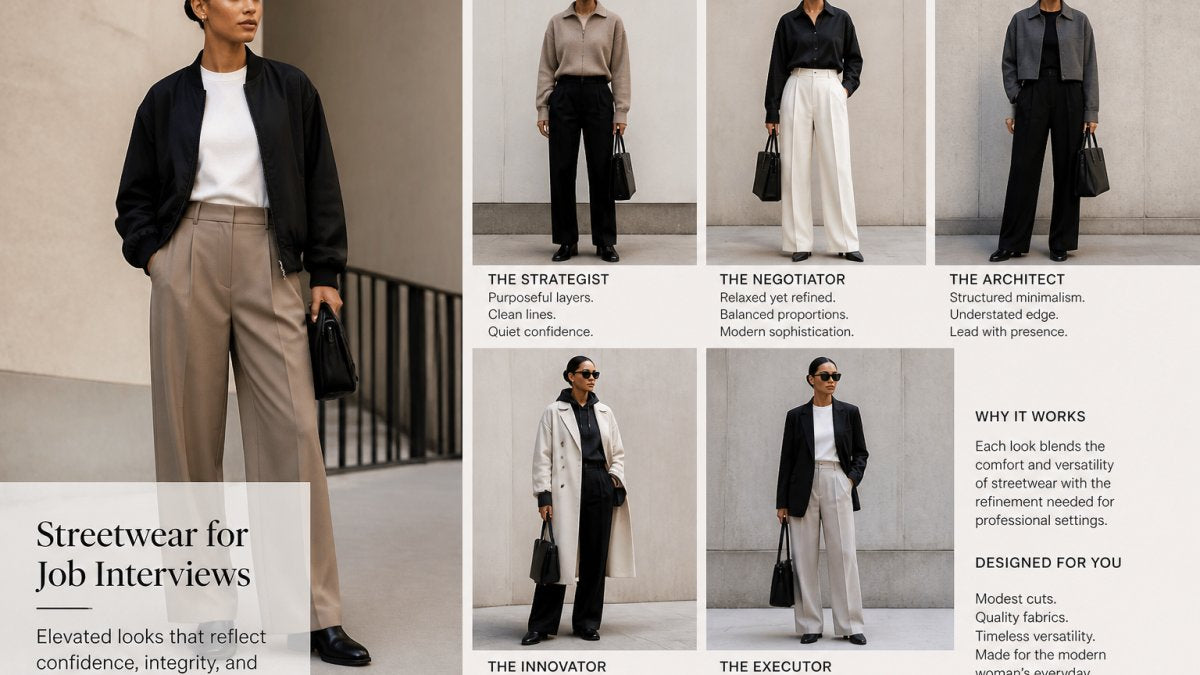
Modest streetwear uses oversized fits, layering, and intentional ease. A relaxed button-down over a fitted tee, wide-leg trousers, or flowing maxi skirt prioritize comfort and coverage while feeling intentional, it's about movement and presence rather than tailored structure.

For interviews, tailored business casual reads as "I'm ready to fit into your organization," while modest streetwear reads as "I'm confident enough to bring my aesthetic to your workplace."
Color Palette and Styling Approach
Business casual leans on neutral colors (navy, black, gray, cream, white) with minimal patterns and understated accessories for a calm, professional effect.
Modest streetwear embraces neutrals but layers them intentionally, blending textures and adding vintage or unexpected pieces. Accessories become part of the story, making the composition feel more considered.
When to Choose Each Style: A Decision Framework
Choose traditional business casual if:
- The industry is inherently conservative (finance, law, healthcare, accounting, government, corporate management)
- The company's website, LinkedIn, or Glassdoor reviews show employees in blazers, structured dresses, or formal business wear
- The role involves client-facing work, especially in regulated industries
- You're interviewing at a large, established organization with formal hierarchies
- The job description uses language like "professional environment," "formal dress code," or "business attire"
- You're uncertain about the dress code and cannot reach the recruiter for clarification Adhering to these expectations ensures your business casual attire remains appropriate regardless of whether your daily tasks shift between a physical office and a remote workspace.
Choose modest streetwear if:
- The industry values creativity and individuality (design, marketing, tech, media, nonprofit, education, creative agencies)
- Company photos show employees in jeans, layered pieces, or non-traditional professional wear
- The role is in a startup, creative department, or mission-driven organization
- The company's brand identity emphasizes authenticity, diversity, or breaking norms
- You've researched the company and confirmed that personal style is welcomed
- You can authentically wear modest streetwear without feeling like you're performing professionalism
The hybrid approach (modest streetwear elevated for business casual environments):
- Wear tailored pieces (fitted pants, structured tops) but add subtle texture, unexpected color combinations, or quality layering
- Choose pieces without visible wear, ensure everything is clean and pressed, and lean toward your more elevated pieces
- Avoid graphic tees, heavily distressed denim, or anything that reads as purely recreational
- This works when you want to respect a conservative environment while maintaining your aesthetic
Dress one level up from the company's everyday norm, but authentically, hiring managers notice discomfort, and it undermines your confidence.
Modest Interview Outfits for Women: Making Each Style Work
Modest Streetwear Interview Looks
Modest streetwear interview outfits prioritize coverage, intentional layering, and pieces that feel like you, ideal for creative companies, tech startups, and organizations that value individuality.

Start with a quality base layer like the Cream Contrast Trim Puff Sleeve Blouse ($45.00), modest and professional, but with personality through contrast trim and puff sleeves.
Closed-toe shoes are essential, loafers, boots, or minimal sneakers that feel intentional.
The Blush Pink Pleated Maxi Skirt ($38.00) paired with a fitted cream or white top and structured blazer or oversized cardigan works well for education, nonprofit, or creative roles where a softer presence is valued.
The key to modest streetwear interview success is intentionality, every piece should feel chosen. Avoid graphic tees, heavily distressed denim, or purely recreational pieces.
Business Casual Interview Looks
Traditional business casual is the safer choice for most interviews, especially in finance, law, healthcare, or corporate environments.
A classic business casual outfit includes tailored dress pants or knee-length skirt, collared button-down or blouse, closed-toe shoes, and minimal jewelry in neutral colors. Any blazer should be fitted and structured.
This approach removes ambiguity and signals respect for professional norms.
What to Wear to a Casual Job Interview
A "casual interview" means the setting is less formal (coffee shop, casual workspace, or video call), but dress code is still professional, just more relaxed than a formal corporate interview.
For casual interviews, modest streetwear often works better. The Gray Plaid Oversized Short Sleeve Shirt ($32.00) paired with dark jeans, tailored trousers, or wide-leg pants reads as professional and approachable.
Dress one level up from the job's typical workday. For remote interviews, look polished from the waist up at minimum.
Job Interview Dress Code Tips: Reading Your Company
How to Research Dress Code Expectations
Visit the company's website, social media, LinkedIn, and Instagram to see what people actually wear.
Call the recruiter or HR contact directly and ask "What's the typical dress code for your team?" Most hiring managers appreciate the question.
Check the company's Glassdoor reviews, where employees often mention dress code culture. Look at news articles or press photos featuring company leadership. If the CEO is in jeans and a t-shirt, that tells you something about the organization's values.
Interpreting Dress Code Language: What Companies Actually Mean
Job postings and recruiter emails often use vague dress-code language. Here's how to decode it:
"Business casual" or "professional environment" means tailored pants or knee-length skirts, collared shirts, closed-toe shoes, minimal jewelry, no denim or graphic tees. This is the safest default if unsure.
"Smart casual" or "business casual with a creative twist" allows tailored, undistressed dark jeans paired with a structured top or blazer. Modest streetwear works if intentional and polished.
"Casual" or "come as you are" means the setting is relaxed, but dress one level up from the company's everyday norm.
"Dress for the role" means dress as if you already work there, more formally for senior or client-facing positions.
Cream Contrast Trim Puff Sleeve Blouse →
No dress code mentioned requires research. Look at social media, employee photos, and Glassdoor reviews. If unclear, default to business casual.
Industry-Specific Dress Code Expectations
Finance, Law, Accounting, Government: Business casual is baseline; many expect business formal. When in doubt, overdress slightly.
Healthcare (clinical roles): Wear business casual for interviews unless the job posting specifies scrubs.
Tech and Software: Smart casual to casual. Jeans work if paired with a structured top or blazer. Modest streetwear shows cultural fit.
Marketing, Design, Creative Agencies: Modest streetwear is often better than traditional business casual, it shows you understand creative culture.
Education (K-12 and Higher Ed): Business casual. Modest streetwear works if polished and intentional.
Nonprofit and Mission-Driven Organizations: Business casual with flexibility for personal style.
Retail, Hospitality, Customer Service: Wear business casual for interviews even if the job is casual, it shows respect for the process.
The Ambiguous Dress Code Checklist
If the dress code is unclear, consider: company size and age (larger/older = more formal), industry sector (conservative = formal, creative = casual), leadership visibility (CEO's style signals culture), employee photos on the website, Glassdoor reviews, and the recruiter's appearance. If everything points to casual but you feel uncomfortable, dress one level up, confidence matters most.
Dressing One Level Up Without Compromising Your Aesthetic
The principle of "dressing one level up" is solid, but it doesn't mean abandoning your personal style. If the company culture is casual streetwear, you can still wear modest streetwear to the interview, just make sure it's polished and intentional.
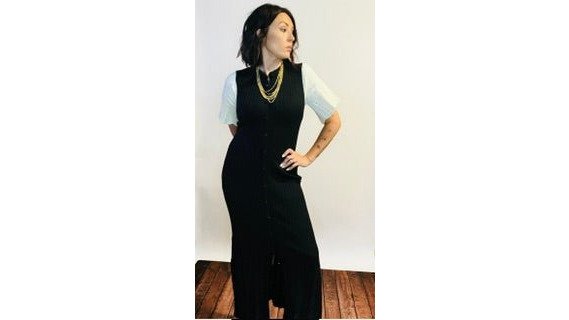
If the company culture is business casual, you can still incorporate modest streetwear business casual elements. The Black & Cream Modest Knit Dress ($70.00) is an example, it's elegant and professional enough for conservative environments, but the minimalist aesthetic and modest maxi length show that you have a considered personal style.

The goal is never to look like you're pretending to be someone you're not. Hiring managers can tell when you're uncomfortable in your own clothes, and that discomfort undermines your confidence. Choose pieces that feel authentically you while respecting the professional context.
Building Versatile Interview Pieces That Transition Beyond the Office
The smartest interview wardrobe strategy isn't to buy pieces just for interviews. It's to invest in quality basics that work for interviews and everyday wear.
A well-fitting cream blouse works in interviews, business casual offices, weekend brunches, and casual Fridays. Dark tailored pants transition from interview settings to regular workdays to dinner dates. A quality blazer or structured cardigan works across contexts.
When you're building this versatile wardrobe, prioritize fit and quality over quantity. One excellent cream blouse with contrast details beats five mediocre basics.
The Vintage Reworked Flannel Jacket ($65.00) is an example of a piece that works across contexts.

Common Mistakes to Avoid in Interview Attire
Choosing comfort over appropriateness. Your interview outfit should be comfortable, but comfort is secondary to professional appropriateness.
Ignoring fit. An expensive blazer that doesn't fit your shoulders properly looks worse than an affordable one that fits perfectly.
Overdoing accessories or perfume. Minimal jewelry, no strong scents, and nothing that jingles or distracts. Your presence should command attention, not your accessories.
Wearing something new without testing it first. Never wear a brand-new outfit to an interview.
Forgetting about shoes and grooming. Interviewers notice shoes. They notice if your nails are clean, if your hair is intentional, if your clothes are pressed.
Misinterpreting "casual" as actually casual. A casual interview is still an interview. Treat it with the same level of intentionality as a formal one.
Choosing between modest streetwear and traditional business casual for interviews comes down to understanding your industry, your company, and your own confidence. Whether you're shopping through e-commerce retail platforms or local boutiques, prioritize fit, quality, and pieces that authentically reflect your style while respecting the professional context. Invest in basics like the Cream Contrast Trim Puff Sleeve Blouse or the Black & Cream Modest Knit Dress, and build an interview wardrobe that transitions seamlessly into your professional life.
Frequently Asked Questions
Can you wear streetwear to a job interview?
Yes, but with intentionality. Modest streetwear works for interviews at creative companies, startups, and tech firms that value individuality. The key is choosing pieces that feel polished and well-maintained. Pair a structured oversized shirt with tailored trousers, clean sneakers or loafers, and minimal accessories. Avoid graphic tees, heavily distressed fabrics, or pieces that read as purely casual. Research the company culture first—some industries expect traditional business casual, while others embrace a more relaxed aesthetic.
What is the difference between modest streetwear and business casual?
Modest streetwear prioritizes coverage and personal expression with a relaxed, intentional edge—think oversized silhouettes, layered pieces, and subtle statement details. Business casual is more structured and conventional, featuring tailored fits, collared shirts, and neutral tones in a more corporate aesthetic. Streetwear allows for more personality through fabric choices and styling, while business casual emphasizes professionalism through formality. Both can be modest and professional; the difference lies in how much personality and edge the outfit conveys.
How should women dress modestly for a job interview?
Choose pieces that cover shoulders, knees, and midriff. Opt for long sleeves or layered short sleeves, knee-length or maxi skirts or pants, and tops that don't cling. Select neutral or soft colors like cream, black, gray, or blush. Prioritize well-fitting garments that skim your silhouette rather than hang loosely. Pair a structured blouse with tailored pants or a modest midi skirt. Add a blazer or cardigan for polish. Choose closed-toe shoes in neutral tones. Quality fabrics and clean, wrinkle-free clothing signal professionalism regardless of your style preference.
What should you wear to an interview with a casual dress code?
A casual dress code means you can skip the blazer and embrace more personality, but still maintain professionalism. Wear clean, well-fitting jeans or chinos with a collared shirt, blouse, or structured top. Layer with a lightweight cardigan or oversized shirt. Choose comfortable closed-toe shoes like loafers or clean sneakers. Avoid heavily distressed clothing, graphic tees with bold messages, or anything that looks like weekend wear. The goal is to look intentional and put-together while showing you understand the company's relaxed culture. Modest streetwear pieces work especially well in this setting.
Are sneakers appropriate for a job interview?
Clean, minimal sneakers can work for casual or creative industry interviews, particularly if the company's culture embraces streetwear aesthetics. They must be pristine—no scuffs, dirt, or worn soles. Pair them with tailored pieces like dark trousers or a midi skirt to elevate the look. Avoid athletic or heavily branded sneakers. If you're unsure about the company's culture, err toward closed-toe loafers, flats, or professional shoes instead. When in doubt, traditional footwear is the safer choice for first impressions.