The Guide to Inclusive Sizing for Modest Boutiques
Last Updated: November 4, 2026
Quick Summary
Inclusive sizing means every customer, from size 2 to size 26, gets a garment cut to the same fit standard. For modest boutiques, that means grading longer hemlines, higher necklines and sleeves consistently across the whole range rather than simply enlarging a straight-size pattern.
- Grade every size from one base pattern with documented ease at each fit point.
- Publish finished garment dimensions in inches, not only body measurements.
- Most modest dress returns come from length, so measure the hem twice.
- Track returns by size and reason every month, then revise patterns and charts.
- Fix your size chart before adding any virtual fitting or recommendation tool.
Table of Contents
- What Inclusive Sizing Means for a Modest Boutique
- Building Size Charts That Customers Trust
- How to Measure Modest Dresses for Online Sales
- Pattern Grading and Fabric Choices for Modest Silhouettes
- Styling Plus-Size Modest Fashion So Pieces Work Together
- Returns, Exchanges and Fit Feedback Loops
- Sourcing, Sustainability and Virtual Fitting Tools
- Start Your Inclusive Size Range With These Three Steps
- Frequently Asked Questions
What Inclusive Sizing Means for a Modest Boutique
Inclusive sizing means that every customer, whether she wears a size 2 or a size 26, gets a garment cut to the same fit standard. A modest boutique has a particular challenge: longer hemlines, higher necklines and sleeves that must sit correctly at the wrist all depend on proportion, and proportion changes across the size range.
The guide to inclusive sizing for modest boutiques starts with one question: does your size range fit the body it claims to serve? A dress labeled "plus" that simply scales up a straight-size pattern can pull at the bust or gape at the back. Getting this right is the first step toward the inclusive sizing that keeps returns low and customers loyal.
Why straight and plus sizes should follow one fit standard
Splitting straight and plus sizes into separate fit systems is one of the most common causes of inconsistent sizing. When a brand grades each range from different base patterns, a customer who is a medium in one piece may be a large in the next. A single fit standard, with consistent ease, shoulder width and rise across every size, makes the range predictable.
Watch out: if your plus sizes are graded by simply enlarging the straight-size measurements, the bust and hip ratios will often be wrong, and the garment will look shapeless on the fuller figure.
Building Size Charts That Customers Trust
A size chart is the first thing a modest shopper checks and the last thing she trusts if it is vague. Measurements should be listed in inches, with bust, waist, hip, full length and sleeve length for each size. Where a dress is designed to sit at a particular point, such as a midi that falls just below the knee, state the length in relation to a standard height so the reader can judge the fit herself.
How to Measure Modest Dresses for Online Sales
Measuring a modest dress for an online listing means recording the flat garment, not the body. Lay the dress on a flat surface, smooth it gently and measure across the chest, waist and hem at the points the shopper would feel them.
Most returns for modest dresses come from length, so measure the hem twice and note whether the length is measured from the shoulder or from the back neck.
Quick answer: how should you measure a modest dress for an online listing? Measure the flat garment at the bust, waist, hip, hem and sleeve, then publish those dimensions in inches next to the body size chart so shoppers can compare the two.
(See also: How Do You Find a Tailor for Better Clothing Fit? for adjustments that help a dress fit more precisely.)
Pattern Grading and Fabric Choices for Modest Silhouettes
Technical pattern grading for modest garments
Pattern grading is the process of scaling a base pattern to every size in the range. For modest garments, grading must preserve the coverage that defines the style: the neckline depth, the sleeve drop and the hem circumference should all grow in proportion, not simply in one direction.
The technical difficulty most guides skip is that modest silhouettes concentrate fit risk at points that straight-size grading rules were never built to protect.
A workable approach is to grade modest garments from a single base pattern with documented ease at each fit point, then run a fit session at the smallest size, the middle of the range and the largest size before the grade is locked.
Fabric choices that change the grade
Fabric weight matters at the coverage points too. A lightweight knit that clings will reveal the fit of the underlayer and read as less modest than the same cut in a mid-weight ponte, so when you grade a clingy fabric, add ease at the hip and thigh rather than relying on stretch to do the work. For long sleeves, a fabric with good crosswise stretch lets you grade the bicep more conservatively; a rigid woven requires a larger bicep increment and a deeper armhole to keep the sleeve from binding. Document the fabric's stretch percentage and recovery next to the grade, because the two together determine whether a size run actually fits the bodies it claims to serve.
Styling Plus-Size Modest Fashion So Pieces Work Together
Modest pieces work best when each one is chosen for how it layers with others.
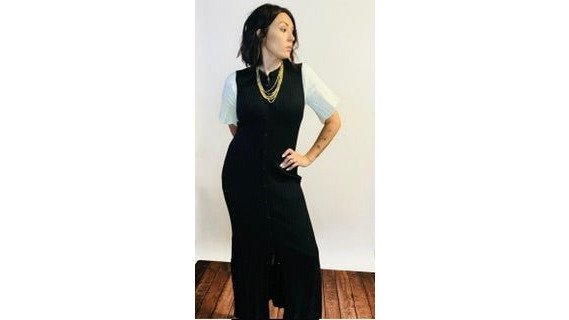
Black & Cream Modest Knit Dress | Elegant Minimalist Maxi Dress for Women →
Building outfits around one or two anchor pieces that share a color family, such as the Black & Cream Modest Knit Dress or the Blush Pink Pleated Maxi Skirt, is one way to give each new purchase a clear place in the wardrobe.


Returns, Exchanges and Fit Feedback Loops
Returns are often the clearest signal of whether your sizing works. Track which sizes are returned most, and for what reason, then feed that data back into the next pattern revision. Customers who can exchange for a different size without friction are far more likely to buy again.
Our own returns and exchange policy is set out in full on our returns and exchanges FAQ, and our longer guide to stress-free clothing returns is worth reading if you are weighing the process from the shopper's side. Clear, fast exchanges turn a sizing miss into a second purchase rather than a lost customer.
Sourcing, Sustainability and Virtual Fitting Tools
Inclusive ranges depend on fabric and supplier choices as much as on pattern work, and this is where most modest boutique guides stop short. The two gaps worth claiming are sustainable sourcing built around a full size run, and interactive sizing tools that actually reduce returns instead of adding another layer of guesswork. Our e-commerce retail setup is where we manage size availability and listings across the full range, so shoppers see accurate stock before they choose a size.
Sustainable sourcing for an inclusive size range
Ask suppliers for documented fiber content, dye information and minimum order quantities that allow a full size run without overstock. Sustainable sourcing for an inclusive range means buying in quantities that match real demand across sizes, so that large sizes are not perpetually out of stock or left unsold. The trade-off is real: minimum order quantities are usually set per color and per fabric, not per size, so a boutique that wants to offer a true size 2 through 26 in one print may have to commit to a deeper buy than a straight-size-only range would require.
Interactive sizing tools and virtual fitting technology
Interactive sizing tools and virtual fitting technology are emerging options. They can help shoppers estimate fit, but they work best when backed by accurate garment measurements. A virtual fitter cannot correct a size chart built on guesswork. The practical sequence is to fix the chart first, then layer a tool on top: publish finished garment dimensions in inches, add a fit-model note with height and size worn, and only then connect a size-recommendation widget or virtual try-on.
Watch out: a virtual fitter layered onto a vague size chart will confidently recommend the wrong size, and the shopper will blame the garment rather than the tool, so treat measurement accuracy as the prerequisite, not the upgrade.
The sourcing-and-tools checklist
Before you commit to a supplier or a fitting tool, confirm four things: the minimum order quantity per color and fabric, the documented fiber and dye information, the size availability you can actually stock and disclose, and whether your size chart is accurate enough for a recommendation tool to build on. Get those four right and the sustainability and technology claims become defensible rather than decorative.
Start Your Inclusive Size Range With These Three Steps
- Set one fit standard. Grade every size from the same base proportions, and document the ease at bust, waist and hip.
- Measure the flat garment. Publish finished dimensions in inches, with a model note and a clear explanation of how each measurement was taken.
- Close the feedback loop. Track returns by size and reason every month, and revise patterns and charts based on what customers tell you.
Edgy Elegance Boutique builds its range around these steps, from our modest cuts to our black and cream modest knit dress, which is designed to move with the wearer. If you want a size range that fits the way it claims to, start with one fit standard and let the data guide the rest.
The three steps below set out the process in order, with the action each one requires.
| Step | What to do | Frequency |
|---|---|---|
| Set one fit standard | Grade every size from the same base proportions | Before the range launches |
| Measure the flat garment | Publish finished dimensions in inches with a model note | For every listing |
| Close the feedback loop | Track returns by size and reason, then revise | Every month |
Frequently Asked Questions
What counts as inclusive sizing?
Inclusive sizing means one fit standard across every size in a range, so a size 16 or 20 is graded with the same care as a size 8. In practice that means the same proportions, the same ease for movement and the same modest coverage at hem, sleeve and neckline. Boutiques that offer only a few plus sizes, or that size up a straight pattern without re-grading it, usually produce garments that pull at the bust or gape at the back. Publish full measurement ranges for every size so customers can match their own body to the chart before they buy.
How do I know which size to choose from an online modest boutique?
Start with the size chart and compare your bust, waist and hip measurements, not your usual label. Look for a fit note that describes how the garment sits, such as relaxed, true to size or oversized. Edgy Elegance Boutique's Midnight Garden Embroidered Mesh Dress at $42.00 and Blush Pink Pleated Maxi Skirt at $38.00 are available to compare against your measurements.
How do you balance modest coverage with an inclusive fit?
Coverage requirements, such as a longer hemline, higher neckline or fuller sleeve, add fabric and change how a garment drapes across different body shapes. Grade the length and sleeve separately from the body block so coverage stays consistent as sizes increase. Fabric weight matters too: the Black and Cream Modest Knit Dress at $70.00 is a soft knit maxi. Test each size on a fit model before listing it.
How can a modest boutique cut its return rate on plus-size pieces?
Most returns in online fashion come from sizing mismatch, so accurate charts and clear measurement instructions do most of the work. Add a short fit note to every product, state the fabric and its stretch or drape, and show a model in a size close to the customer's. Make the return process simple and visible, starting with the 30-day window. Track which sizes are returned most and feed that back into the next grading run.
Are modest boutique clothes made with durable fabric worth the price?
Durability depends on fabric weight, stitching and construction, not on the label. Look for product descriptions that name the fabric and explain how it is made. Edgy Elegance Boutique focuses on quality over quantity, and its Gray Plaid Oversized Short Sleeve Shirt at $32.00 and Oversized Graphic Camo Tee and Biker Shorts Set at $50.00 are listed as everyday pieces. Judge value by cost per wear over the months you expect to keep the piece.
What should a boutique owner do first to become more size inclusive?
Begin with a measurement audit of your current range: record actual finished measurements for each size, then compare the grading between your smallest and largest sizes. Fix the chart before adding new sizes, because an inaccurate chart creates returns across the whole catalog. Then review your return reasons for the past six months and prioritize the size groups with the most fit complaints. Each change should be tested on a fit model and checked against customer feedback.