


Is High Quality Clothing Worth the Investment?
Table of Contents
- Why High Quality Clothing Outlasts Fast Fashion
- The Cost Per Wear Formula: What You Actually Pay Per Outfit
- How to Spot Quality Fabrics Before You Buy
- Building a Capsule Wardrobe with High Quality Investment Pieces
- Ethical Production and Sustainability: Why It Matters Beyond the Price Tag
- How to Care for High Quality Garments So They Last
- Frequently Asked Questions
Last Updated: September 2, 2026
Most people who switch from fast fashion to high quality clothing reach the same turning point: they do the math and realize they've spent more replacing cheap pieces than they would have buying one good one. The question "is high quality clothing worth the investment" has a clear answer once you understand how garments are built, what they cost per wear, and how they hold up over years of real use.
Why High Quality Clothing Outlasts Fast Fashion
High quality clothing outlasts fast fashion because of how it's made. The gap between a $15 blouse and a $70 dress reflects decisions at every production stage: fiber selection, fabric weight, cut, and finishing. Fast fashion compresses all of those decisions toward the cheapest option at each step. The result is predictable: seams split after a few washes, colors fade, fabric pills. A garment costing less upfront but lasting six months costs far more per wear than one holding its shape for three years.
Garment Construction: What Holds a Piece Together
You can evaluate garment construction without technical background by knowing where to look. Stitch density is the clearest indicator: well-constructed garments use tighter, more consistent stitching that resists pulling apart under tension. Check stress points first, underarms, waistbands, pocket openings, where shortcuts show up fastest.
Finishing details signal care and quality control. Flat-felled seams, bound edges, and French seams are labor-intensive. Raw, unfinished interior edges fray with washing and weaken the garment. Turn a garment inside out before buying to see what you're actually paying for.
Tailoring and fit directly affect durability. A piece cut generously with seam allowances that permit minor alterations lasts longer because it doesn't strain at stress points.
Natural Fibers vs. Synthetic Materials: What Your Wardrobe Needs
Natural fibers, cotton, wool, linen, silk, offer breathability, natural drape, and tend to improve with wear. Quality wool resists pilling better than low-grade versions. These fibers biodegrade at end of life, which matters for eco-conscious consumers. The tradeoff is that they require more careful care and can shrink or wrinkle if handled poorly.
Synthetic materials like polyester, nylon, and acrylic resist shrinkage and hold color well. The problem is breathability: many synthetic blends trap heat and moisture, affecting comfort. They also shed microplastics with each wash, a documented environmental concern flagged by the Environmental Protection Agency's textile waste resources.
The best investment pieces use thoughtful blends: a natural fiber base with a small percentage of synthetic for structure or stretch. Read the fiber composition label honestly and understand what you're buying.
The Cost Per Wear Formula: What You Actually Pay Per Outfit
The cost per wear formula is the single most useful tool for evaluating whether high quality clothing is worth the investment:
Cost Per Wear = Purchase Price ÷ Number of Times Worn
A $30 fast fashion top worn four times costs $7.50 per wear. A $90 quality piece worn 90 times over three years costs $1.00 per wear. The expensive piece is dramatically cheaper in practice.
| Garment | Purchase Price | Estimated Wears | Cost Per Wear |
|---|---|---|---|
| Fast fashion blouse | $30 | 4-8 wears | $3.75-$7.50 |
| Quality knit maxi dress | $70 | 60-100 wears | $0.70-$1.17 |
| Quality moto jacket | $33.75 | 80-120 wears | $0.28-$0.42 |
| Fast fashion jacket | $25 | 10-15 wears | $1.67-$2.50 |
This calculation should also factor in maintenance. Quality pieces requiring dry cleaning add to their cost per wear. Machine-washable pieces that hold up well keep their cost per wear low without adding upkeep costs.

Resale Value: How Quality Pieces Depreciate Slower
Quality garments hold resale value far better than fast fashion, which is essentially worthless secondhand. A well-maintained quality piece can recover a meaningful portion of its original price on resale platforms. Timeless design, durable construction, colorfastness, and minimal wear protect resale value. When calculating whether a quality piece is worth buying, subtracting a realistic resale estimate from the purchase price gives you the true net cost.
How to Spot Quality Fabrics Before You Buy
You can develop the skill to spot quality fabrics quickly through physical examination and reliable online signals.
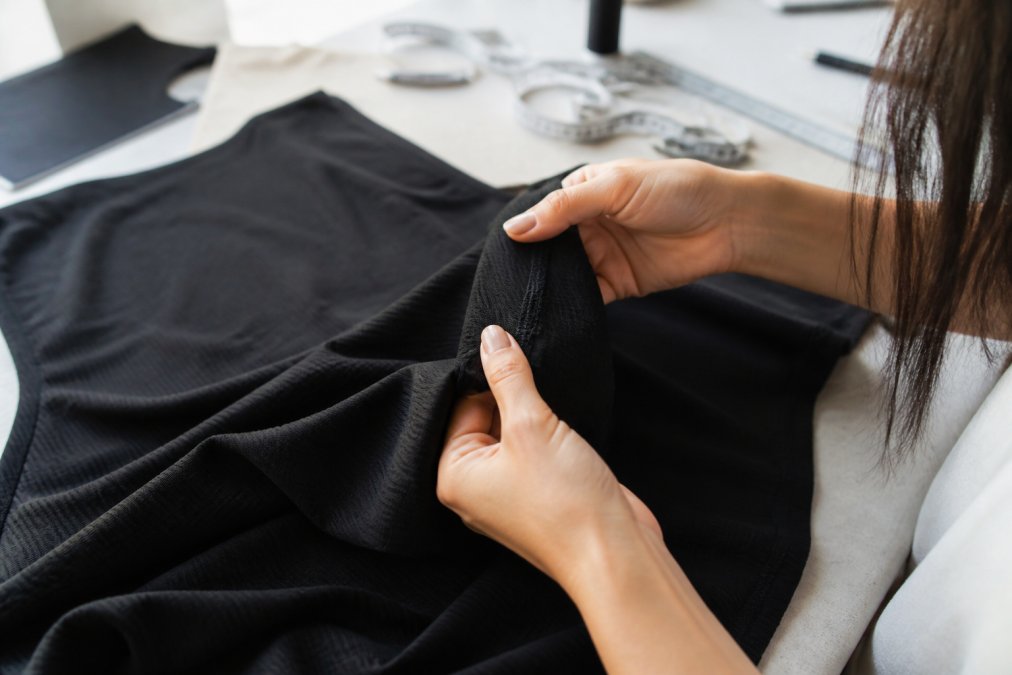
Start with fabric weight. Hold the fabric up to the light. Quality fabric has density and opacity; thin, see-through fabric signals low fiber content. A heavier weight generally indicates more material and correlates with durability and better drape.
Rub the fabric between your fingers. Quality fabric feels substantial and smooth. Fabric that pills immediately under light friction will pill aggressively in the wash. Stretch the fabric gently and release: it should recover its shape. Fabric that stays stretched will lose its fit quickly.
Seam Integrity, Stitch Density, and Finishing Details
Quality seams lie flat with no puckering and consistent stitch density throughout. Puckered or uneven seams indicate tension problems that will worsen with washing. Check interior finishing: serged edges are standard; bound or French seams signal elevated construction. Raw edges that fray after the first wash indicate production shortcuts.
Pay attention to hardware: metal outlasts plastic. Buttons should be sewn with a shank underneath to reduce stress on the fabric. A button sewn flat will pull through under normal use.
Fabric Identification Guide: Reading Labels and Feeling the Difference
Reading fiber composition labels accurately is foundational. The label lists fibers in descending order by percentage. A garment labeled "95% cotton, 5% elastane" is primarily natural fiber with minimal stretch. A garment labeled "60% polyester, 40% viscose" is primarily synthetic.
For online purchases, as the Federal Trade Commission's textile labeling requirements mandate, all garments sold in the US must carry accurate fiber content labels. If a retailer's product listing doesn't include fiber composition, that's a warning sign about their quality standards.
Building a Capsule Wardrobe with High Quality Investment Pieces
A capsule wardrobe built around high quality investment pieces is the most practical application of cost-per-wear logic. The goal is a small collection of versatile garments that combine freely and stay relevant across seasons.
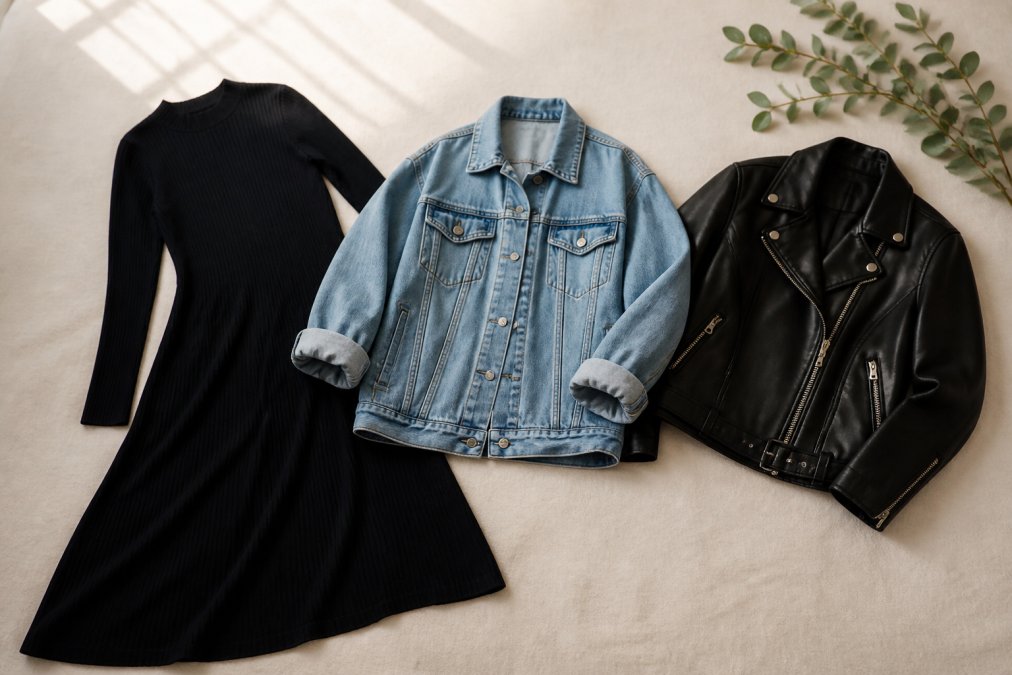
The core is pieces with timeless design: clean silhouettes, neutral colors, and construction that holds up to frequent wear. A knit maxi dress that works for work, dinner, or weekend errands is worth far more than three single-occasion pieces at the same total price.
At Edgy Elegance Boutique, pieces like the Black & Cream Modest Knit Dress ($70) are designed for wardrobe rotation. Clean lines and modest fit mean it reads as elevated without being occasion-specific. The Oversized Denim Jacket ($28) and Black Faux Leather Moto Jacket ($33.75) function as layering pieces that shift any base outfit.


- A knit maxi dress + moto jacket = office-ready
- The same dress + denim jacket + sneakers = weekend casual
- The dress alone with heels = evening-appropriate
Versatility as a Quality Metric
Versatility is underrated as a quality metric. A garment functioning across multiple contexts is objectively more valuable than one working for only one occasion. When evaluating any investment piece, ask how many distinct outfit combinations it enables and how many different settings it's appropriate for.
Timeless design supports versatility. Garments with clean, unfussy silhouettes without trend-specific details stay wearable across multiple years. Trend-driven pieces have a built-in expiration date that accelerates depreciation.
Ethical Production and Sustainability: Why It Matters Beyond the Price Tag
Garments produced under ethical manufacturing conditions tend to use better materials and more careful construction. Factories that pay fair wages and maintain safe working conditions have lower turnover, more skilled workers, and stronger quality control.
The environmental case for high quality clothing is straightforward. Fast fashion generates significant textile waste: garments worn a handful of times end up in landfills, where synthetic materials persist for decades. According to the EPA's overview of textile waste and sustainability, textile waste represents a growing share of municipal solid waste. Buying fewer, better pieces reduces that footprint directly.
A garment that holds its color and structure through dozens of washes stays in rotation longer. One that fades after five washes gets replaced, generating waste and additional spend.
How to Care for High Quality Garments So They Last
Proper garment care is where investment pieces either justify their cost or get wasted. Most quality garments fail prematurely because of care mistakes, not construction flaws.
Cold water washing is the single most protective habit. Heat degrades fibers, shrinks natural fabrics, and sets stains permanently. Wash in cold, and most shrinkage risk disappears.
Turn garments inside out before washing to protect the outer surface and preserve colorfastness. Air dry whenever possible. Tumble drying applies heat and mechanical stress simultaneously. A garment that air dries retains its shape far longer.
Store knits folded, not hung. Hanging a knit garment stretches it at the shoulders over time, distorting the fit permanently.
For specific care guidance by fiber type, the Textile Exchange's fiber and materials resources provide detailed guidance on maintaining natural and blended fiber garments.
| Garment Type | Wash Temp | Drying Method | Storage |
|---|---|---|---|
| Knit dresses | Cold, gentle | Air dry flat | Folded |
| Denim jackets | Cold, inside out | Air dry on hanger | Hung |
| Moto-style jackets | Spot clean or cold | Air dry | Hung |
| Linen pieces | Cold or lukewarm | Air dry | Folded or hung |
| Wool | Hand wash cold | Air dry flat | Folded |
The investment in quality garments pays off only if the care matches the construction. A well-made piece treated carelessly will fail just as fast as a cheap one.
Frequently Asked Questions
Q: Does high-quality clothing actually last longer than fast fashion?
A: Generally, yes. High quality clothing is built with denser stitching, stronger seam integrity, and more durable natural fibers that resist pilling, shrinkage, and colorfastness loss over time. A fast fashion piece worn 10 times before it deteriorates costs far more per wear than a well-constructed garment worn 100 times or more. The difference shows up in how the fabric holds its shape and drape after repeated washing and wearing.
Q: What is the cost per wear formula and how do I use it?
A: The cost per wear formula is simple: divide the purchase price by the number of times you wear the item. A $70 dress worn 50 times costs $1.40 per wear. A $20 dress worn 5 times before it pills or fades costs $4.00 per wear. The formula makes the financial case for investment pieces clear, especially for wardrobe staples you reach for weekly. The lower the cost per wear, the better the long-term value.
Q: What clothing items are worth investing in for a capsule wardrobe?
A: Focus investment on pieces you wear most often and across multiple occasions: structured jackets, versatile dresses, and layering staples. A knit maxi dress that transitions from a workday to a weekend dinner earns its cost per wear quickly. Timeless designs in neutral or classic colorways also hold resale value better than trend-driven pieces. Prioritize garment construction and fabric weight over brand name when building a capsule wardrobe.
Q: How can you tell if a garment is high quality before buying online?
A: Check the fiber composition label first: natural fibers like cotton, wool, and linen signal better breathability and durability than blends heavy in polyester. Look at product photos for seam finishing, stitch density, and how the fabric drapes on the body. Read size and fit details carefully. Brands that provide fabric weight, care instructions, and detailed construction notes are typically more transparent about textile quality than those that only describe the aesthetic.
The hardest part of building a wardrobe that actually works isn't finding quality pieces. It's resisting the pull of constant newness that fast fashion is designed to create. Edgy Elegance Boutique is built around the opposite philosophy: intentional pieces with modest cuts, street-elevated design, and construction meant to last. With a 30-day guarantee and worldwide shipping, the barrier to trying a better approach is low. Shop the collection and start building a wardrobe that earns its keep.
This article was written using GrandRanker
