
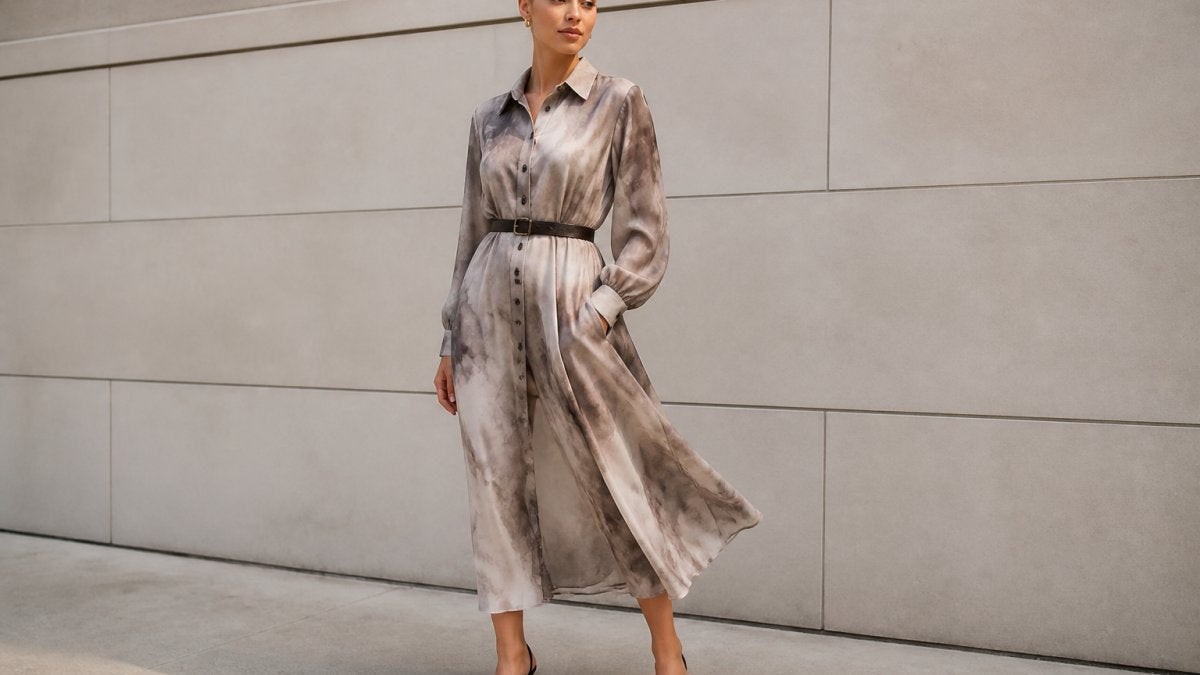
How to Create a Capsule Wardrobe in 2026
Last Updated: October 26, 2026
Quick Summary
To create a capsule wardrobe in 2026, audit your closet first, then build a cohesive color palette with a 60/30/10 split of neutrals to accents. Aim for a 30-36 piece capsule with set counts per category, and rotate pieces seasonally instead of replacing them.
- The 3-3-3 rule combines three tops, three bottoms, and three pairs of shoes into nine outfits.
- Sort decluttering into three piles: keep, repair or tailor, and release.
- Choose two or three neutrals as your base rather than all six.
- A workable starting count for a capsule is 30-36 pieces.
- Cost-per-wear divides a garment's price by the number of times you wear it.
Table of Contents
- What a Capsule Wardrobe Actually Looks Like in 2026
- Step 1: Audit Your Closet Before You Buy Anything
- Step 2: Build a Cohesive Color Palette and Neutral Base
- Modest Capsule Wardrobe Essentials for Every Season
- How to Mix and Match Clothes Without Overthinking It
- Budget Tracking and Cost-Per-Wear: The Math That Justifies Investment Pieces
- Garment Care, Tailoring, and Sustainable Disposal
- Shop the Edgy Elegance Capsule Pieces That Do the Work
- Frequently Asked Questions
What a Capsule Wardrobe Actually Looks Like in 2026
A capsule wardrobe is a small, curated collection of versatile clothing pieces that mix and match to create multiple outfits from a limited number of items. In 2026, the approach has moved past the old "30 pieces for 90 days" formula toward something more personal: fewer, better pieces chosen for how you actually live.
Learning how to create a capsule wardrobe in 2026 starts with a mindset shift, not a shopping list. The goal is a closet where nearly everything works with nearly everything else.
The 3-3-3 Rule and Other Frameworks That Still Work
The 3-3-3 rule is a styling shortcut: three tops, three bottoms, and three pairs of shoes that combine into nine distinct outfits. It is a starting point for testing whether your pieces genuinely mix and match.
Other frameworks worth knowing:
- The 10-item base: ten foundational items in neutral tones that carry most of your outfits.
- Seasonal rotation: a small core wardrobe you rotate in and out as temperatures shift, rather than one giant closet.
- The one-in, one-out rule: every new purchase replaces an existing piece.
For a modest-specific walkthrough, our guide on how to build a modest capsule wardrobe goes deeper than this overview can.
Step 1: Audit Your Closet Before You Buy Anything
The most common mistake is buying new pieces before understanding what you already own.
Start by pulling everything out. Try each piece on. Ask three questions: Does it fit right now? Does it work with at least two other items? Would you wear it this month?
The Three-Pile Method for Wardrobe Decluttering
Sort every garment into three piles:
- Keep: fits well, versatile, worn regularly
- Repair or tailor: good quality but needs a hem, button, or adjustment
- Release: wrong fit, worn out, or never worn
Be honest about the release pile. Wardrobe decluttering is the step most people skip, and it is the one that makes the rest of the process work.
Step 2: Build a Cohesive Color Palette and Neutral Base
A cohesive color palette is what makes a small wardrobe feel large. The difference between a capsule that works and one that stalls is proportion: a 60/30/10 split, roughly 60% of your pieces in core neutrals, 30% in secondary neutrals or tonal shades, and 10% in accent colors. That ratio keeps outfits from feeling flat without letting a single loud piece hijack the whole closet.
Pick Your Neutrals First
Neutral tones typically include black, cream, gray, navy, camel, and white. Choose two or three as your base rather than all six, a tighter neutral set is what allows every piece to mix.
Test your neutrals against your skin tone in daylight before committing. Hold each candidate fabric next to your face near a window; the ones that make your complexion look even rather than washed out are your keepers.
Add Accents Deliberately
Accents can be anything, but keep them to one or two so every piece still mixes with the rest. Good accent categories for a capsule:
- One jewel tone (emerald, burgundy, sapphire) for evening and statement moments
- One earth tone (rust, olive, terracotta) for daytime warmth
- One print that contains at least two of your neutrals, so it bridges rather than clashes
Avoid accent pieces that only work with one outfit. If an accent top cannot pair with at least three bottoms in your closet, it is a guest star, not a capsule piece.
Concrete Palette Recipes That Work
Three palettes that reliably mix across seasons:
- Black / cream / camel + burgundy accent, the most versatile for office and evening; camel softens black so outfits do not read as uniform.
- Navy / white / gray + olive accent, cooler and more casual; works well with denim and knitwear.
- Cream / camel / chocolate brown + rust accent, warm and tonal; the easiest palette to layer because the values sit close together.
Customize the Palette to Your Body and Silhouette
A palette that flatters your proportions matters as much as one that mixes. Two adjustments most people miss:
- Vertical balance: if you are shorter, keep your darkest neutral on the bottom half and your lightest on top to draw the eye upward. If you are taller, reverse it or use a monochrome column in one neutral to elongate.
- Horizontal balance: if you carry weight through the midsection, place your accent color on the shoulders or shoes rather than at the waist, so the eye lands where you want it.
These are not rules about hiding your body, they are tools for directing attention. A capsule built around your actual silhouette gets worn more, which is the whole point.
If you want concrete combinations, our guide to mix and match color palettes lays out palettes that work together without guesswork.
Modest Capsule Wardrobe Essentials for Every Season
A modest capsule wardrobe essentials list looks different for everyone, but the categories that do the heavy lifting are consistent. The useful question is not just what to include but how many of each, a capsule fails most often because it has three of one category and none of another.
A workable starting count for a 30-36 piece capsule:
Black & Cream Modest Knit Dress | Elegant Minimalist Maxi Dress for Women →
- Base layers: 5-6 (fitted tops and tanks that sit under everything)
- Tops: 4-5 (blouses, knits, button-downs)
- Bottoms: 4 (one relaxed denim, one tailored trouser, one skirt, one wide-leg or column pant)
Seasonal Rotation, Not Seasonal Replacement
The 2026 approach is a small core wardrobe you rotate in and out as temperatures shift, rather than one giant closet. Keep the base layers, bottoms, and footwear constant; swap the layers and dresses at the shoulder seasons. A light knit becomes a mid-layer in spring and a top in fall. A knit dress works standalone in warm months and as a layering base in cool ones.
Transitional Pieces That Earn Their Space
Transitional pieces are the ones that work in two seasons, which is why they belong in a capsule at all:
- A blazer that reads professional over a blouse and casual over a knit dress
- A denim jacket that layers over everything from a tank to a midi dress
- A light knit that works as a top alone or under a coat
Quality Over Quantity, With a Number Attached
The Black & Cream Modest Knit Dress ($70.00) is described as suitable for workdays, brunch, dinners, and slow weekends. Its listing describes a soft breathable knit fabric and a comfortable relaxed silhouette.

Black & Cream Modest Knit Dress | Elegant Minimalist Maxi Dress for Women
Customize the Essentials to Your Body and Silhouette
The generic list above is a starting point, not a prescription. Adapt the counts to your proportions:
- If you are petite: shift one bottom and one layer into a third dress or a second tailored piece, fewer, longer lines read better than many broken ones.
- If you are tall: add a long layer (a duster or long cardigan) and a second wide-leg bottom; cropped pieces fragment your line.
- If you carry weight through the hips or midsection: favor column dresses and straight-leg bottoms over tapered ones, and put your structure in the shoulders via a blazer or puff sleeve.
A capsule built around your actual silhouette gets worn more, which is the whole point.
How to Mix and Match Clothes Without Overthinking It
Learning how to mix and match clothes comes down to one habit: build outfits from a fixed set of formulas rather than starting from scratch each morning.
Three formulas that cover most days:
- Neutral base + one accent (cream blouse, black trouser, statement bag)
- Denim + structured top (wide-leg jeans, puff sleeve blouse, boots)
- Dress + layer (knit maxi dress, denim jacket, sneakers)
For a fuller breakdown of combinations, our guide to mixing and matching clothes walks through more formulas.
Budget Tracking and Cost-Per-Wear: The Math That Justifies Investment Pieces
Cost-per-wear is the price of a garment divided by the number of times you wear it.
Track two numbers in a simple spreadsheet: purchase price and wear count. Review monthly. Investment pieces earn their price through versatility and durability, not brand name.
If you are weighing whether elevated basics are worth the upfront cost, our piece on whether investing in elevated basics pays off makes the case with the same math.
Garment Care, Tailoring, and Sustainable Disposal
A capsule wardrobe only stays small if the pieces last. For practical fixes that keep your knits in rotation, see our guide on how to repair small snags in high quality knitwear.
Sustainable disposal closes the loop. When a piece truly leaves your rotation, options include donation, textile recycling programs, resale, and clothing swaps. Circular fashion is not a marketing phrase, it is a practical habit: the longer a garment stays in use, the lower its real cost and impact.
Shop the Edgy Elegance Capsule Pieces That Do the Work
A capsule wardrobe is only as good as the pieces inside it. Our collection features modest cuts and versatile pieces. You can browse and shop online.
Piece |
Price |
Role in a Capsule |
|---|---|---|
Black & Cream Modest Knit Dress |
$70.00 |
Standalone outfit or layering base |
Cream Contrast Trim Puff Sleeve Blouse |
$45.00 |
Structured top for denim or trousers |
Oversized Denim Jeans |
$42.25 |
Relaxed everyday bottom |
Oversized Denim Jacket |
$28.00 |
Transitional layering piece |
The Cream Contrast Trim Puff Sleeve Blouse is described as wearable with relaxed denim or black trousers. The Oversized Denim Jacket is described as an everyday layering piece.


Best for: busy professionals and mothers seeking versatile, modest streetwear. Skip if: you are looking for trend-driven statement pieces rather than long-term staples.
Frequently Asked Questions
What is the 5-4-3-2-1 method for building a capsule wardrobe?
The 5-4-3-2-1 method is a counting framework: five tops, four bottoms, three dresses or layers, two pairs of shoes, and one statement accessory. It gives you roughly 15 core pieces that can be combined into dozens of outfits. The numbers are a starting point, not a rule. If you work in an office five days a week, you may need more tops than someone who works from home. Use the count to stop overbuying, then adjust for your actual week.
How many pieces should a modest capsule wardrobe essentials list include?
Most workable capsules land between 25 and 40 pieces total, including shoes and outerwear. A modest capsule wardrobe essentials list usually starts with long-sleeve knits, a maxi dress, wide-leg trousers or denim, a button-down blouse, a layering jacket, and closed-toe shoes. The exact number matters less than whether each piece covers your body the way you want and pairs with at least three other items already in the closet.
How do I know if a piece is worth the higher price?
Run a cost-per-wear calculation before you buy. Divide the price by the number of times you expect to wear it in a year. Check fabric content too.
How do I transition a capsule wardrobe between seasons without overspending?
Keep your base layers and foundational items year-round, then rotate in two or three seasonal pieces rather than replacing everything. When you do add something, buy pieces that layer over what you already own, and set a fixed seasonal budget before you browse.
What should I do with clothes I remove during a wardrobe audit?
Sort removed items into four groups: sell, donate, repair, and textile recycling. Sell anything in good condition with resale value. Donate clean, wearable pieces to a local charity. Send stained or worn-out fabric to a textile recycling program rather than the trash.
How accurate is sizing when buying capsule pieces online?
Check the specific measurement chart for each item rather than assuming your usual size. Compare your bust, waist, and hip measurements to the listed numbers, and read the fit notes.
Building a capsule wardrobe takes an honest closet audit, a tight palette, and the discipline to buy fewer, better pieces. That is the challenge, and it is worth meeting. Edgy Elegance Boutique offers modest, street-elevated designs with a focus on quality over quantity, worldwide shipping, and a 30-day guarantee, so you can build a wardrobe that works as hard as you do. Get started with Edgy Elegance Boutique and dress with intention every day.


